Elenger expands bio-LNG supplies to Tallink, targeting full renewable fuel transition
Elenger provides Tallink with bio-LNG and covers already 74% of the fuel demand of Tallink’s shuttle vessels, according to the company’s January summary. The goal is to replace Tallink’s entire current LNG demand with biomethane in the near future.
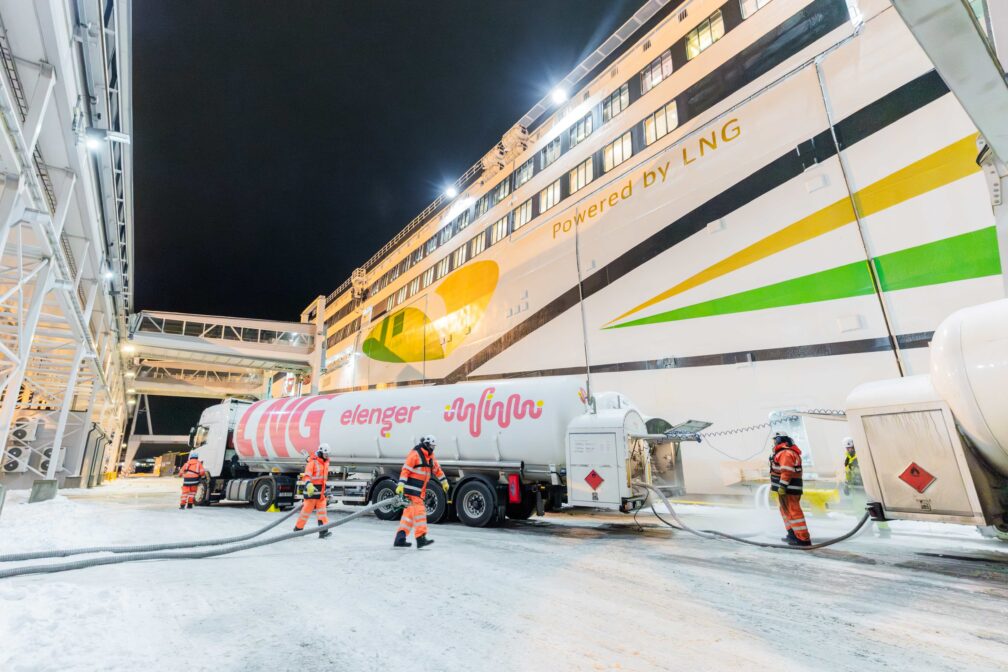
Elenger bunkering Tallink shuttle vessel
“Tallink is the most forward-looking shipping company on the Baltic Sea and began using LNG as early as 2017. We have supplied them with LNG throughout these years and now Elenger provides Tallink with bio-LNG supporting their next step toward a cleaner future. We started first deliveries last summer and have progressed rapidly – Elenger’s bio-LNG already covers 74% of the fuel demand of Tallink’s shuttle vessels,” commented Margus Kaasik, Chairman of the Management Board of Elenger Grupp.
“Megastar and MyStar, operating the busiest route between Tallinn and Helsinki, are real examples that cleaner maritime transport is not just a future ambition – it is already achievable today. By switching to biofuel, we have created the greenest connection across the Gulf of Finland,” said Paavo Nõgene, Chairman of the Management Board of Tallink Grupp. “For Tallink, this is not merely a fuel change but a long-term strategic step. We are pleased that our partner Elenger has secured the necessary fuel volumes. If pricing and availability remain sufficient, we will continue using biomethane in the long term,” Nõgene confirmed.
The use of fuel produced from renewable raw materials enables the shipping company to comply with increasingly stringent greenhouse gas reduction requirements set by the European Union and the International Maritime Organization (IMO). With a full transition to bio-LNG, greenhouse gas emissions from the shuttle vessels are expected to decrease by approximately 75% compared to fossil fuel use.
All of Elenger’s biofuel deliveries are accompanied by official certificates verifying that a defined share of renewable fuel has been used throughout the supply chain and that it complies with international standards. This is particularly important for freight operators that closely monitor their environmental footprint.
Learn more about LNG solutions HERE.